
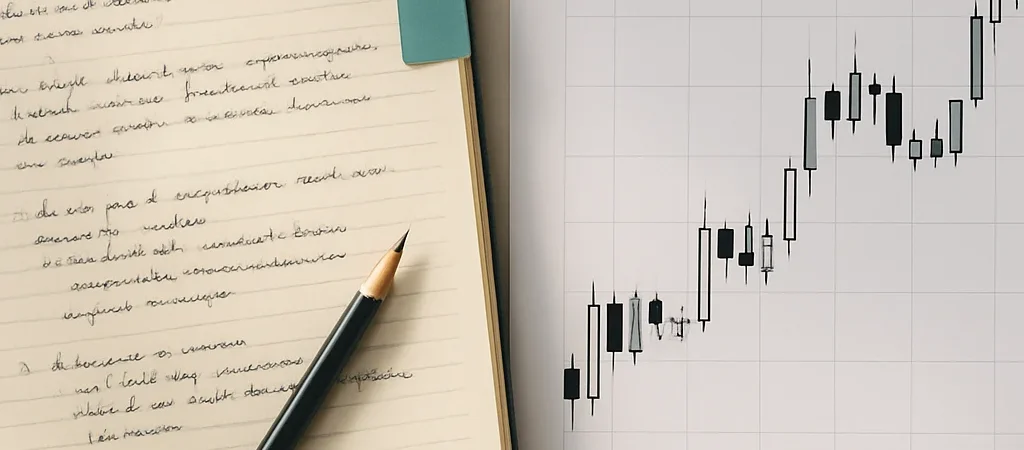
You do not have to place a trade to learn from a market idea. Save the chart, write down the reasoning, and return later to see what the market did. That simple habit shifts attention from collecting calls to understanding how an idea was formed.
Record the original reasoning
Note the market, timeframe, date, and the condition the signal was watching. Keep the explanation in its original context rather than adding reasons after the price has moved. A brief record makes it easier to separate what was known at the time from what only became clear later.
You can also write down what you do not understand. Terms such as support, resistance, or volatility describe concepts that need context; seeing one on a chart does not automatically explain how it was identified. Looking up unfamiliar language is part of evaluating the idea, not a detour from it.
Review without hindsight
When you revisit the chart, compare the outcome with the original conditions and timeframe. Ask whether the expected setup appeared, whether the reasoning remained relevant, and what changed along the way. Avoid judging the quality of an idea only by whether the market moved in the suggested direction.
A handful of notes will not prove that a method works, but they can expose questions worth studying and help clarify your own understanding. Free signals are most useful when they lead to better questions, not when they replace them. Keep the risks in view and remember that no review can guarantee future outcomes.